Hail Damage in Arkansas: What to Check and Why Wind Ratings Matter
Two houses on the same street can come out of the same storm in very different shape, which is why a proper look matters.
October 1, 2026 · 3 min read
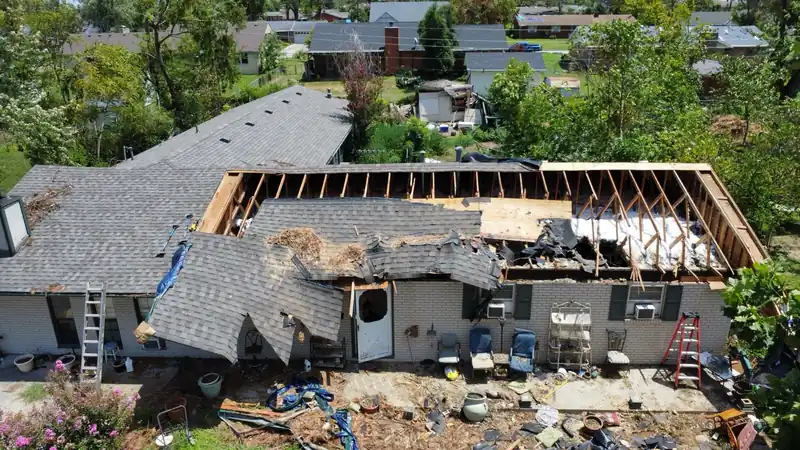
Spring and summer storms in Arkansas can drop anything from pea-sized pellets to baseball-sized stones. Sometimes the damage is obvious the next morning. Other times the roof looks fine from the driveway and the trouble shows up months later as a stain on a ceiling. Hail and wind are two of the most common reasons homeowners call a roofer, and understanding how each one affects shingles helps you decide what to do after a storm.
How hail actually hurts a roof
Hail forms when frozen rain falls during a severe storm, and the stones hit with real force. On an asphalt shingle, an impact can knock off the granules that protect the surface, bruise the shingle underneath and weaken the seal that holds it down. Once the granules are gone, the shingle ages faster in the sun and rain. Water can find its way into spots that were never meant to take it, and the leak that follows may not appear for a long time.
Hail rarely stops at the roof. Gutters get dented, fascia boards crack, siding chips and fences loosen or lean. Because hail is so unpredictable, two homes on the same street can have completely different results after the same storm. A neighbor's roof being fine tells you nothing about yours.
Signs to look for after a storm
Start from the ground, then check inside. You can safely look at a lot without climbing anything.
- Dented or missing shingles, or bare patches where granules have washed away
- Granules collected in gutters or at the bottom of downspouts
- Dented gutters, downspouts, vents or metal flashing
- Cracked siding or chipped paint on the side of the house facing the storm
- Loose or leaning fence sections
- Water stains on ceilings or damp spots in the attic
If you find any of these, take clear photos with the date on them before anything is moved or cleaned up. Photos help whether you end up with a simple repair or a bigger project.
What wind ratings mean
Hail gets the headlines, but wind does its own damage. On an ordinary day, Arkansas winds run somewhere between 3 and 20 miles per hour. A thunderstorm or tornado can push gusts past 100 mph, and that's when shingles lift, tear or peel away. Shingle wind ratings describe how much force the product can take before it starts to come off the deck, and they depend on the materials, the adhesive seal and how the roof was installed.
Asphalt shingles are sorted into classes by the wind speed they were tested to resist:
- Class A: up to 60 mph
- Class D: up to 90 mph
- Class F: up to 110 mph
- Class G: up to 120 mph
- Class H: up to 150 mph
Metal shingles are rated differently. Instead of wind speed, they're measured by uplift pressure, and they fall into classes 30, 60 and 90 depending on how much vacuum pressure the material can take while staying anchored. Neither rating is a guarantee for a particular roof, because the shape of the roof, the slope and the installation all play a part. A steeper slope with well-sealed shingles generally holds up better than a shallow one with weak seals.
Choosing a roof for Arkansas weather
If you're replacing a roof, ask what wind class the shingles carry and how they'll be fastened. A higher class costs more, and for some homes it makes sense while for others it doesn't. Roofs on open lots, hilltops or the edge of a subdivision take more wind than a house sheltered by trees and neighbors. Metal roofing is another option for homeowners who want extra protection from severe weather. Ventilation and clean installation matter as much as the product itself.
Claims and getting the roof looked at
If a storm has damaged your roof, you may be dealing with your insurance company. Elite Home Solutions works directly with insurance providers to document and process hail, wind or fire damage claims. What an insurer decides is always up to the insurer, but good documentation of what was found on the roof makes the conversation easier. Start with an inspection so you know what you're dealing with before you decide anything.
We offer free roof inspections across Northwest and Northeast Arkansas, and our emergency response team covers both areas when a storm leaves a roof open. Call (479) 231-1199 for Springdale and Northwest Arkansas, or (870) 277-4242 for the Jonesboro office. We're open Monday through Saturday, 8 AM to 6 PM.
Elite Home Solutions, (479) 231-1199
Call (479) 231-1199More articles
Common Signs of Roof Damage in Arkansas
Most roof problems start small and quiet, so knowing where to look can save you a much bigger repair later.
Metal Roofing Benefits for Arkansas Homes
A metal roof costs more up front, so it's worth knowing what you get for it and when asphalt is still the better call.